LinkedIn Monitoring: Track Brand Mentions and Keywords on LinkedIn
LinkedIn is where business decisions get made publicly. Executives announce strategies. Professionals share opinions on tools. Buyers discuss vendors with their networks. For B2B brands, LinkedIn monitoring is not optional. It's where your reputation with the people who matter most is being shaped every day.
This guide explains what LinkedIn monitoring covers, how to use it for brand intelligence and lead generation, and how to track competitor activity on the platform that most monitoring tools ignore.
Why LinkedIn Monitoring Is Different
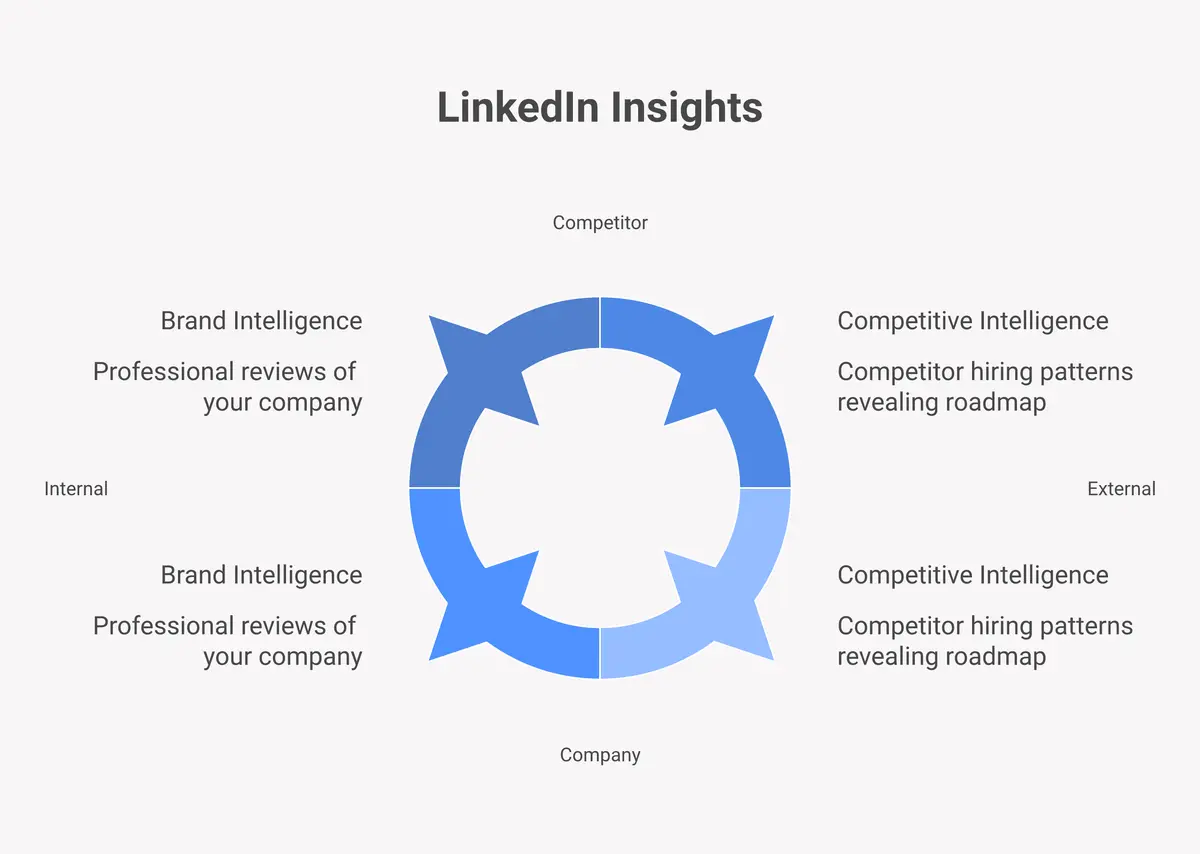
LinkedIn monitoring is different from other social platforms because the audience is different. You're not watching consumers complain about a product. You're watching decision-makers discuss vendors, executives announce strategy shifts, and investors comment on market trends.
LinkedIn has over 1 billion members worldwide, with a disproportionate concentration of executives, managers, and B2B buyers. A mention from an influential voice on LinkedIn can affect your hiring pipeline, your investor relationships, and your sales cycles in ways that a Twitter mention rarely does.
What LinkedIn mentions actually look like
LinkedIn brand mentions take many forms. Someone might tag your company in a recommendation post. A customer might write a public case study about how your product solved their problem. A frustrated user might post a critique that gets hundreds of likes. An industry analyst might mention your tool in a market comparison thread. A LinkedIn mention tracker catches all of these, whether your brand is tagged or just named.
The B2B stakes of LinkedIn monitoring
A single negative post from a respected executive can reach thousands of their followers. A positive endorsement from an industry leader can generate inbound inquiry. DataReportal notes that LinkedIn consistently ranks as the most trusted social platform among business professionals. What's said there carries more weight than on most other channels.
Monitor Your Brand on LinkedIn
LinkedIn brand monitoring means tracking every post, comment, and article that mentions your company, products, or key people on the platform. To monitor LinkedIn mentions effectively, you need a tool that catches not just direct tags but also untagged name references in posts and comments. This includes direct mentions, indirect references, and conversations in LinkedIn groups.
What to track
Track your company name, your main products, your leadership team names, and any recent campaigns or launches. Also track your key brand associations. If you're a project management tool, track mentions of your tool alongside phrases like "team collaboration" or "remote work tools." This surfaces conversations where your brand is relevant even when it's not directly named.
Why LinkedIn brand monitoring matters for reputation
LinkedIn comments live longer than Twitter posts. A critical comment on a popular LinkedIn post can stay visible for weeks as new people engage with it. If a complaint gains traction and goes unanswered, that silence is visible to everyone who sees it. LinkedIn brand monitoring ensures you see these conversations fast enough to respond while the thread is still active.
Find B2B Leads on LinkedIn Conversations
LinkedIn is one of the most productive channels for B2B lead generation through monitoring. Buyers openly discuss their problems, vendor frustrations, and tool-switching intent on LinkedIn in ways that create natural engagement opportunities.
The types of posts that signal buying intent
Look for posts where someone asks for tool recommendations in your category. Look for posts where someone complains about a competitor's product. Look for posts where a manager announces a new initiative that your product directly supports. Each of these signals a specific type of buying intent. A LinkedIn mention tracker that catches these in real time gives your sales team warm conversation starters instead of cold outreach.
Engaging the right way
Responding to LinkedIn posts as a brand requires more care than responding on Reddit or Twitter. LinkedIn interactions are visible to the poster's entire professional network. A thoughtful comment that genuinely helps answers the question and positions your product as relevant without being promotional. This builds both trust and visibility with the broader network that can see the exchange.
Track Competitor Activity on LinkedIn
LinkedIn is uniquely useful for competitive intelligence because it surfaces strategic signals that other platforms don't. Executives post about product visions. Companies announce partnerships. Hiring patterns reveal which products are being built.
Hiring signals as competitive intelligence
When a competitor starts hiring aggressively in a specific product area, that's an early signal about their roadmap. If a competitor is suddenly posting 20 senior engineering roles focused on mobile development, they're building something for mobile. You can see this months before any public announcement. Monitor competitor LinkedIn activity and you're essentially reading their strategic playbook in real time.
Tracking competitor content performance
Which posts from your competitors get the most engagement on LinkedIn? What topics do their audiences respond to most? These insights tell you what resonates with your shared target market. If a competitor's post about a specific use case gets thousands of likes, that use case is clearly important to your audience. Add that angle to your own content calendar.
LinkedIn and All Other Platforms in One Dashboard
LinkedIn monitoring is most powerful when it's part of a unified monitoring setup. LinkedIn tells you what business professionals think. Reddit tells you what power users think. Twitter shows real-time reactions. News and blogs show media narratives. Together they give you the full picture.
Most monitoring tools don't include LinkedIn at all. It's technically harder to monitor than open platforms. This means brands that do monitor LinkedIn have an advantage. They see a class of conversations that their competitors are completely blind to.
mentionmind monitors LinkedIn alongside Reddit, Twitter/X, TikTok, Instagram, Facebook, and the web from one dashboard. You can filter by platform to focus on LinkedIn-specific insights, or view all platform mentions together for a complete brand overview. Combined with brand monitoring across the web, this gives you the most comprehensive intelligence available.
How to Set Up LinkedIn Monitoring
Setting up LinkedIn monitoring in mentionmind is the same process as setting up monitoring for any other platform. You define your keywords and select LinkedIn as one of the platforms to watch.
Keywords to use for LinkedIn monitoring
For linkedin brand monitoring, start with your exact company name as LinkedIn shows it. Add your key product names and the names of executives who represent your brand publicly. For linkedin keyword monitoring of your category, add phrases that describe the problems your product solves and terms that B2B buyers in your space commonly use.
Setting up alerts for B2B relevance
Configure real-time alerts for executive mentions and direct brand tags on LinkedIn. Use daily digests for general category keyword monitoring and competitive intelligence. Because LinkedIn posts have longer visibility than tweets, a same-day response is usually timely enough, unlike Twitter or Reddit where conversations move faster. Track mentions on linkedin across all keyword types from a single notification setup.
Ready to start monitoring LinkedIn alongside every other platform? Try mentionmind free and track your brand mentions on LinkedIn and six other platforms from a single dashboard.
Frequently Asked Questions
What is LinkedIn monitoring?
LinkedIn monitoring is the process of tracking mentions of your brand, products, competitors, or keywords across LinkedIn in real time. A LinkedIn mention tracker scans posts, comments, and articles for your keywords and delivers them to a central dashboard. This gives B2B brands visibility into professional conversations that directly influence purchase decisions, partnerships, and reputation.
Why is LinkedIn monitoring important for B2B brands?
LinkedIn is where B2B buyers evaluate vendors, share peer recommendations, and discuss business challenges. A mention from an executive or influential professional can reach thousands of decision-makers in your target market. Monitoring LinkedIn means you see these conversations as they happen, so you can engage meaningfully and manage your professional reputation proactively.
How is LinkedIn monitoring different from monitoring Twitter or Reddit?
LinkedIn conversations carry higher professional stakes. The audience is decision-makers, managers, and executives. Posts are more deliberate and visible for longer periods. A LinkedIn comment can be seen by the poster's entire professional network. This means response quality matters more on LinkedIn and the intelligence you gather is more directly relevant to B2B sales and partnerships.
Can LinkedIn monitoring help me find competitors' strategic plans?
Yes. Competitor hiring patterns on LinkedIn reveal product development directions months before public announcements. Executive posts often hint at strategic priorities. Partnership and customer success posts show which market segments competitors are targeting. Combined with competitor monitoring across other platforms, LinkedIn gives you the most comprehensive view of competitor strategy available from public sources.
Does mentionmind monitor LinkedIn?
Yes. mentionmind monitors LinkedIn as one of its seven platforms, alongside Reddit, Twitter/X, TikTok, Instagram, Facebook, and the web. All LinkedIn mentions for your keywords appear in the same dashboard as your other platform data. You can filter by LinkedIn specifically or review all platforms together. See the pricing page for details on keyword limits and monitoring plans.