Cheap AI Marketing Tools That Actually Move the Needle in 2026
Marketing on a tight budget sounds simple until the tool bills stack up. Most SaaS platforms are priced for enterprise teams. A basic analytics suite, a scheduling tool, an email platform, and a monitoring solution can easily run $400/month before you add anything extra.
The good news: you don't need to spend that much. A focused set of cheap marketing tools, selected by function rather than brand name, can cover the full marketing loop from content creation to brand monitoring. The key is knowing which categories actually matter and which ones you can delay.
This guide covers the best ai marketing tools available in 2026 for teams running on a budget. You'll learn which free options are genuinely useful, where most cheap marketing software falls short, and how to build a full-coverage stack for under $100/month.
What Makes a Cheap Marketing Tool Actually Worth It?
A cheap marketing tool is worth using when it replaces manual work that costs more in time than the subscription costs in money. Price tag alone tells you nothing. A $10/month tool used daily that saves two hours of manual research beats a $200/month platform used twice.
The evaluation filter is simple: does this tool produce output your business would otherwise pay someone to create? If yes, it earns its place. If not, it's a subscription you'll cancel in six months.
ROI beats the price tag every time
When evaluating affordable marketing tools, frame the value question this way: what does an hour of your team's time cost? If a tool saves three hours per month and your hourly rate is $50, a $30/month subscription is paying for itself. That math applies whether the tool handles scheduling, email automation, or brand monitoring.
Integration and learning curve add to the real cost
A tool that takes five hours to set up and another three to connect to your existing stack is not cheap. It's just cheap-priced. The best low-cost marketing tools work out of the box, connect to the platforms you already use, and don't require a specialist to configure.
The Best AI Marketing Tools for Teams on a Budget
AI-powered tools have shifted what's possible on a small budget. Tasks that once required a specialist, including writing, design, data analysis, and brand monitoring, now have accessible software options that start at $0. Here's where to start.
Brand monitoring and social listening
mentionmind tracks brand mentions across Reddit, LinkedIn, Twitter, TikTok, Instagram, Facebook, and the web. For a marketing team currently relying on manual Google searches to track what people say about your brand, this is the highest-ROI addition to a lean stack.
The average marketing manager spends several hours each week manually checking social platforms for mentions. mentionmind automates that entirely. Set your keywords once, and every relevant conversation surfaces in your dashboard. That's a function that directly improves brand monitoring without adding headcount.
It also covers competitor monitoring. If someone complains about a rival's pricing on Reddit, your team knows about it immediately. That's intelligence that manually costs hours every week to gather.
AI tools for content creation
ChatGPT and Claude both offer free plans that handle first-draft copy, blog outlines, email subject line testing, and social post variations. According to HubSpot's marketing industry trends report, more than 60% of marketers now use AI tools as part of their daily workflow. The starting cost is $0.
The output needs a human edit. AI speeds up production but doesn't replace strategy or subject-matter expertise. Use it to cut content production time, not content standards.
Email marketing on a budget
Mailchimp's free plan covers up to 500 contacts with basic automations included. Mailchimp's email benchmark data shows average open rates around 35% across industries. Email stays one of the highest-ROI channels in marketing, and you can run a serious operation on the free tier until your list outgrows it. That's the marketing tools category at its most practical.
When you hit the contact limit, Brevo (formerly Sendinblue) offers a free plan with up to 300 emails per day. Both are solid options for teams keeping costs low.
Are Free Social Media Management Tools Actually Useful?
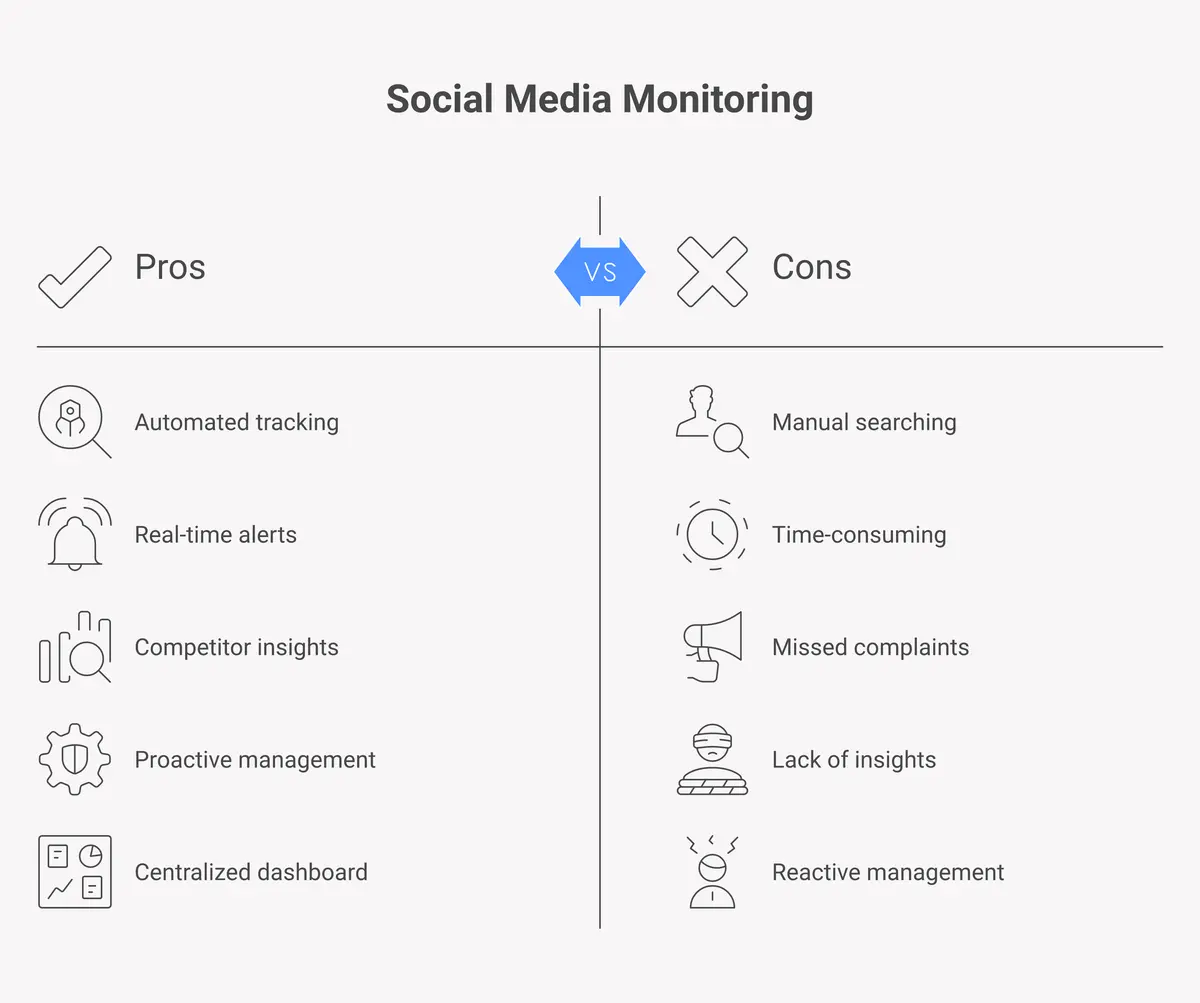
Free social media management tools are genuinely useful for scheduling and publishing, but they almost always skip the more valuable half of social media work: monitoring. Free scheduling tools handle your output. They don't tell you what's coming back. That gap is where most small teams lose visibility into their brand's real-time reputation.
Free scheduling tools worth using
Buffer's free plan connects up to 3 social channels with a 10-post queue per channel. Later's free plan supports 1 profile per platform with basic scheduling. For teams posting a few times a week, either option covers the basics at no cost.
If your team is still building a consistent posting habit, start here. Set up a scheduling tool, build a content calendar, and then layer in monitoring. You can explore that side without cost by reading our guide on free social media monitoring tools and what they actually cover.
What free tools consistently skip
Free tools don't track what other people post about you. They help you push content out. They don't surface conversations happening about your brand, your competitors, or your industry right now.
That's the blind spot. Free social media management tools handle maybe 40% of what active social media marketing actually requires. The other 60% is listening, monitoring, and responding. That's where mentionmind fills the gap. Start monitoring free to see what your brand is missing right now.
Social Media Marketing Tools That Justify Their Cost
Scheduling vs. monitoring: two different jobs
Scheduling tools (Buffer, Later) are about output. You're paying to organize and automate what you publish. For most small teams, the free tiers cover everything needed for scheduling.
Monitoring tools are about intelligence. They track what others say about your brand and competitors. This is where brands consistently underinvest. A single customer complaint going viral costs more in lost trust than a full year of monitoring subscription fees.
According to Sprout Social's social media statistics, 76% of consumers value how quickly a brand responds to their needs. You can't respond to what you can't see. That's the core argument for adding a monitoring layer, even on a tight budget.
Picking tools that earn their spot
Before adding any social media marketing tool to your stack, apply this test: does it save more than an hour of manual work per week? If yes, run the ROI math against the subscription cost.
Most Hootsuite alternatives compete on price. mentionmind competes on coverage, tracking 7 platforms where most tools cover 2 or 3. For teams that need complete visibility, that difference is significant.
How Do You Build a Full Marketing Stack for Under $100/Month?
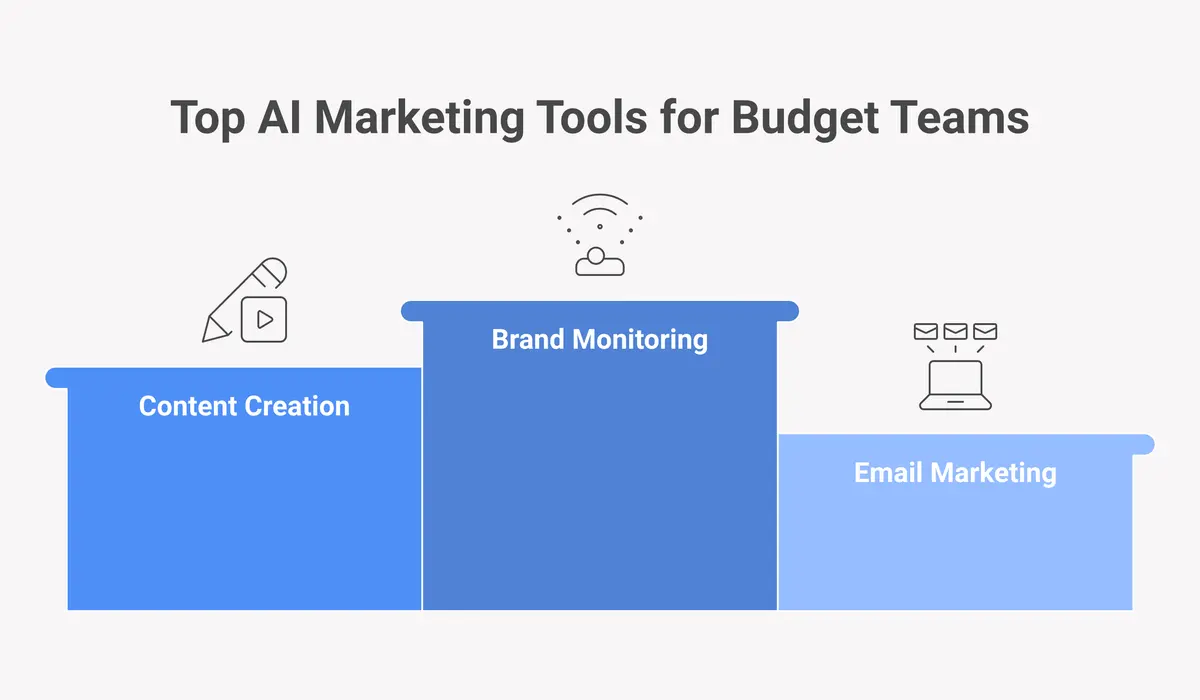
You can build a complete marketing stack for under $100/month by covering three categories: content creation, distribution, and intelligence. Most cheap marketing tools focus on distribution. The category most teams skip is intelligence, which includes brand monitoring, competitor tracking, and social listening.
The three categories every stack needs
Content creation: AI writing tools (ChatGPT or Claude, both have free plans) and Canva for design (free plan available) cover most content production needs at no initial cost.
Distribution: Buffer or Later for social scheduling (free plans), Mailchimp or Brevo for email (free plans). Both categories have capable free tiers for teams posting fewer than 20 times a week and managing lists under 1,000 contacts.
Intelligence: mentionmind for brand monitoring, competitor tracking, and social listening across all 7 major platforms. This is the one category where free alternatives genuinely fall short. Manual brand monitoring takes hours every week. Automated monitoring takes minutes to set up and runs continuously in the background.
A sample $100/month marketing stack
Here's what a lean, full-coverage budget marketing software stack looks like in practice:
- mentionmind, brand monitoring and social listening, from around $30/month
- Canva Pro, design, from $15/month
- Mailchimp Essentials, email marketing, from $13/month
- Buffer Essentials, social scheduling, from $6/month
That's around $64/month for a complete stack. If you're not ready for paid email or scheduling tiers, drop both to free plans and run the full setup for around $30/month. The one category worth keeping paid is monitoring, because the free alternatives don't cover enough platforms to give you a real picture.
For a deeper look at what performs best at the monitoring layer, see the breakdown of the best social media monitoring tools for marketing teams in 2026.
Frequently Asked Questions
What is the cheapest social media marketing tool that actually works?
Buffer's free plan is one of the most capable cheap social media marketing tools for scheduling, supporting up to 3 channels and 10 posts per channel. For monitoring, mentionmind covers 7 platforms from around $30/month. The most effective budget setup combines a free scheduling tool for publishing with a dedicated monitoring tool for listening.
Are AI marketing tools worth it for small businesses?
Yes. Free ai marketing tools like ChatGPT and Claude handle content drafts, email subject lines, and social copy at no cost. For teams producing regular content, AI tools routinely cut production time by 40-60% per piece, making them one of the highest-ROI additions to any lean stack. The main investment is time spent reviewing and editing the output.
What free social media management tools do marketers actually use?
Buffer and Later are the two most widely used free social media management tools. Buffer allows 3 connected channels with a 10-post queue per channel on the free plan. Later offers 1 profile per platform with basic scheduling. Both work well for small teams building a consistent posting habit without a paid subscription.
What should a small business marketing stack include?
A small business marketing stack needs three categories: content creation (AI writing and design tools), distribution (social scheduling and email), and intelligence (brand monitoring and social listening). Most teams build the first two and skip the third. The intelligence layer is where you learn what your audience says about you outside your own posts and where competitor gaps become visible.
How is mentionmind different from other cheap marketing tools?
mentionmind is built specifically for monitoring and social listening, covering Reddit, LinkedIn, Twitter, TikTok, Instagram, Facebook, and the web in one dashboard. Most cheap marketing tools are scheduling tools that handle publishing but not listening. mentionmind fills the monitoring gap that free tools consistently leave open, at a price that fits inside a lean marketing budget.